Dates are Excel dates, amounts are numbers with two decimals, and check or reference numbers are text so leading zeros survive.
Supported PDF layout
PDF input must be searchable text with a YYYY-MM-DD, Description and signed Amount table. Scanned PDFs and other layouts are not supported. The preview shows at most ten rows; opening and running balances are not inferred or verified. CSV and financial interchange formats are available in the matching converter tools.
Why convert a bank statement PDF to Excel here
Pasting a statement into Excel produces text that looks like numbers and dates that refuse to sort. The difference between that and a usable workbook is typing and structure: real date cells, numeric amounts, identifiers stored as text, one row per transaction, and no subtotal or footer lines mixed in. The converter accepts a strict, text-based PDF table. It does not infer layouts or balances; CSV is recommended for statements in other formats.
The workbook shows transaction totals grouped by account and currency. Compare the transaction count and totals with the source before relying on the export.
Only the documented searchable PDF table layout is accepted. Wrapped descriptions and other page structures are not reconstructed.
Scanned/image-only PDFs are not supported. Use a text-based PDF in the documented table layout or export CSV from your bank.
Up to 20 files per batch when each uses the supported searchable PDF table layout. Check the totals against the source before relying on the workbook.
Uploads are validated, hashed with SHA-256 and deleted once the job record exists. The original never leaves your device in editable form.
How the bank statement PDF to Excel conversion works
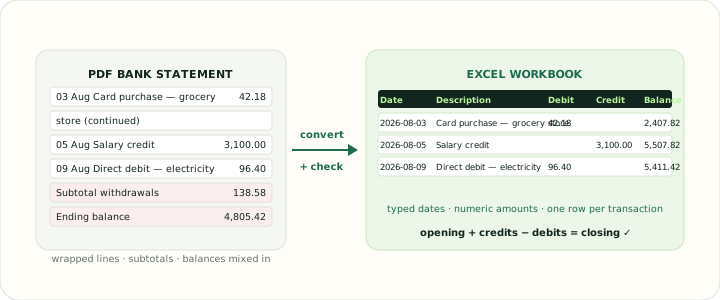
- 1Upload supported searchable PDFsUse the YYYY-MM-DD, Description and signed Amount table layout. Scanned and other PDF layouts are rejected.
- 2Review the extracted rowsReview the generated transaction preview and grouped totals, then compare them with the source.
- 3Export the workbookDownload the XLSX and open it in Excel, LibreOffice or Google Sheets. Keep the bank-issued PDF as the official record.
What the Excel workbook contains
The workbook contains the fields parsed from the supported table. It types dates and amounts and includes a summary of transaction totals; statement opening and closing balances are not inferred or checked.
| Column | What it holds | Check applied |
|---|---|---|
| Date | Parsed date as a real Excel date (source layout requires YYYY-MM-DD) | Dates are validated strictly |
| Payee / Memo | Description and memo text from parsed rows | Unsupported rows and layouts are rejected |
| Debit, Credit, Amount | Debit and Credit are derived from the signed Amount | Compare transaction totals with your original |
| Balance | Optional source Balance value when present in the supported table | Not inferred or reconciled |
| Reference | Parsed reference text | Check against source where applicable |
| Source File | Uploaded filename for each row | PDF page numbers are not extracted |
Example of the exported rows
| Date | Description | Debit | Credit | Balance |
|---|---|---|---|---|
| 2026-08-02 | Card purchase | 24.50 | — | 1,175.50 |
| 2026-08-03 | Incoming transfer | — | 500.00 | 1,675.50 |
Beyond Excel: the other outputs
The same extraction feeds every tool under All tools, so a statement reviewed once can be exported to whichever format the next step needs.
One header row, one transaction per line, ISO dates and plain numeric amounts, ready for spreadsheet imports and accounting upload screens.
QBO, QFX and OFX exports require correct account, institution and balance details. Provide verified values and test the file with the destination application.
QIF and IIF exports use the record structure those programs expect, including balanced TRNS and SPL lines for QuickBooks Desktop.
The export requires existing bank and counterparty ledger names. It writes balanced journal entries from the parsed signed amounts.
File handling after you upload
A statement reveals account identifiers, balances, counterparties and spending habits, so the handling rules are strict and visible. Every request is validated for file type and size, the job and file metadata are recorded in the database with a SHA-256 checksum, and the temporary upload is removed as soon as the job exists. The original document is not stored. Browser downloads land in your own download folder, so apply the same care to the exported workbook as to the original.
If you are reading statements for the first time, the consumer regulator's guidance on what a statement contains and how to dispute an error is a good companion: see Ask CFPB for US accounts, and the bank statement example page here for an annotated sample.
✓ File type validation✓ 25 MB per file, 20 files per job✓ SHA-256 checksum recorded✓ Temporary upload removed after the job
Bank statement PDF to Excel FAQ
Can the converter process scanned bank statement PDFs?
No. Scanned/image-only PDFs cannot be read by this converter. Use a supported text PDF table or export CSV from your bank.
Which Excel columns will the workbook contain?
Date, Payee, Memo, Debit, Credit, Amount, Balance when present in the source, Reference, FITID, Account, Currency, Category and Source File. Dates are real Excel dates and amounts are numeric.
Does the database store my original PDF?
No. The upload is validated, a SHA-256 checksum is recorded against the job, and the temporary file is deleted from the server once the job has been created. The original stays on your device.
Why should balances be checked after PDF extraction?
The converter does not infer or verify opening and closing balances. Compare the exported transaction count and totals with the original statement before using the file.
Can I convert a year of statements at once?
Yes. A job accepts up to 20 PDFs of 25 MB each, processes them in date order and writes them to one worksheet with amounts grouped by account and currency.
What if I need CSV, QuickBooks or Google Sheets instead of Excel?
Open All tools and pick that converter. The upload box works the same way; only the instructions and the output format change.